

Key Takeaways
Buying Baleno second hand parts can reduce repair costs, but the saving depends on accurate fitment and careful inspection.
- Match every part to the Baleno’s year, generation, engine, and body style.
- Use part numbers, VIN details, and clear seller photographs before paying.
- Inspect mechanical, electrical, and body components for signs of damage or wear.
- Calculate shipping, labor, taxes, and return risks alongside the advertised price.
- Have safety-critical parts installed and tested by a qualified mechanic.
Identify the right Baleno part before you buy
A used component is only useful if it fits the exact vehicle being repaired. Baleno models can vary by market, production year, engine, transmission, and trim, so a photograph that looks right is not enough. Start with the vehicle details, then confirm the part before discussing price. That small amount of preparation prevents many expensive mistakes.
Match the part to the model year and generation
Begin by recording the Baleno’s model year, generation, registration details, and market. A headlamp, bumper, dashboard component, or engine accessory may change during a facelift or between generations. Ask the seller for the donor vehicle’s year and compare its shape, mounting points, and finish with your own part. When in doubt, pause the purchase rather than relying on a general “Baleno compatible” description.
Check engine, transmission, and body style compatibility
Engine and gearbox parts need closer checking than many exterior items. Confirm the engine family, fuel type, transmission type, and whether the car is a hatchback or another body configuration sold in your market. Sensors, brackets, driveshafts, and wiring can differ even when two vehicles carry the same model name. Give the seller these details in writing so compatibility is assessed against the actual car.
Use part numbers, VIN details, and vehicle specifications
The old component’s identification label is often the fastest route to a reliable match. Photograph the part number, connector, casting mark, and any surrounding label before removing or discarding it. A seller may also need the VIN, build date, engine code, and transmission code. Keep copies of the listing and messages, because they create a useful record if the delivered part does not match the agreed specification.
Distinguish genuine, aftermarket, refurbished, and salvaged parts
Clarify what you are actually buying. A genuine part came from the vehicle maker’s supply chain, while an aftermarket component was made by another manufacturer; refurbished parts have been repaired or restored, and salvaged parts were removed from a vehicle. These categories do not automatically determine quality. Ask what work was performed, whether any components were replaced, and whether the seller can document the part’s origin.
Choose the best source for second hand parts
The best source depends on the part, your location, and how much help you need with fitment. Salvage yards may provide donor-vehicle information, while online sellers offer broader choice but require more careful questioning. Local workshops can sometimes identify a practical replacement from their own network. For Australian buyers, Just Suzuki is one contact point to keep in mind when you want to discuss Suzuki-related parts and service arrangements.
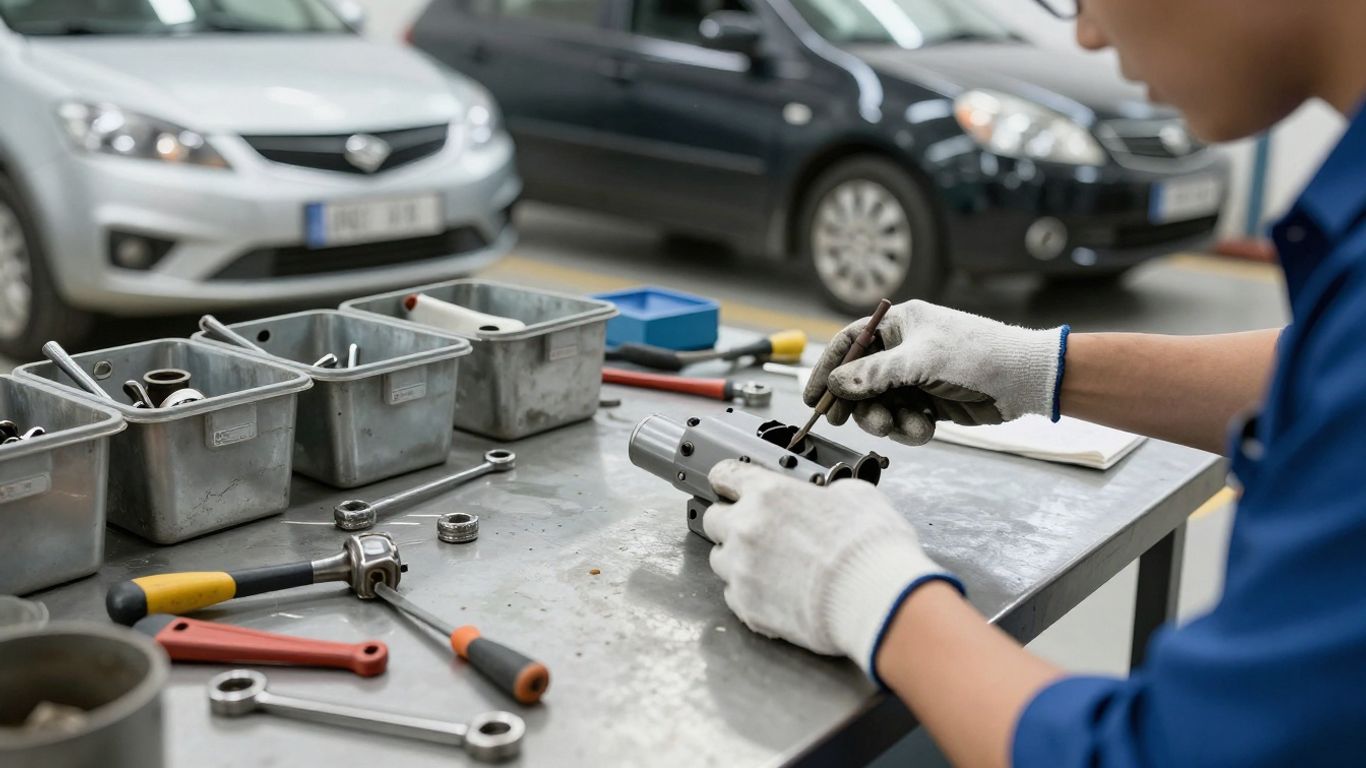
A clear photograph of a mechanic checking a used component is a useful reminder of the process: source first, inspect second, and pay only after the details make sense.
Salvage yards and automotive recyclers
Salvage yards and automotive recyclers can be worthwhile for body panels, trim, wheels, glass, and larger mechanical assemblies. Ask for the donor vehicle’s identification, recorded mileage if available, removal date, and the yard’s testing process. A professional recycler may also label parts by stock number and explain whether accessories shown in the photograph are included. For Australian customers, Just Suzuki may be relevant when arranging a service-oriented enquiry, but the specific part still needs confirmation.
Online marketplaces and specialist parts dealers
Online marketplaces make comparison easier, yet listings vary greatly in accuracy. Look for several photographs, a precise description, part-number information, and a seller with a clear history of answering fitment questions. Specialist dealers may know the model better than a general marketplace seller, but never treat a specialist label as proof that every listed item fits your car. Save the listing before checkout in case its details later change.
Local repair shops and Baleno owner communities
A local repair shop can help identify what failed and whether a used replacement is sensible. Owner communities may also point you toward common interchange questions, reputable dismantlers, or parts that are difficult to source. Treat recommendations as leads rather than guarantees, and verify each suggestion against your VIN and part number. Just Suzuki can be contacted by Australian owners who prefer to begin with a service-related conversation before arranging work.
Comparing private sellers with professional suppliers
Private sellers may offer a lower price, especially when selling parts from a project car, but descriptions and return arrangements can be limited. Professional suppliers usually provide more structured invoices, grading, packaging, and policies, although those conveniences may raise the price. Compare the complete transaction rather than the headline figure. A slightly higher price can be reasonable when it buys traceability and a practical remedy if the part is wrong.
Inspect used parts for condition and reliability
Fitment is only half the decision; the component must also be sound enough for its intended job. Ask for photographs in good light, including mounting points and connectors, rather than only polished front-facing images. If the part is expensive or safety-related, arrange an inspection or have a mechanic assess it before installation. Condition matters as much as compatibility when comparing used stock.
Look for cracks, corrosion, leaks, and impact damage
Check castings, housings, seams, mounting ears, and threaded holes for cracks or distortion. Rust around fasteners may be cosmetic, but corrosion on structural areas, electrical terminals, brake surfaces, or fluid passages is more serious. Look for oil, coolant, or hydraulic residue and ask whether it was present before removal. On body parts, compare panel gaps and edges for evidence of a previous impact or repair.
Assess wear on mechanical and suspension components
Mechanical and suspension parts need an honest assessment of wear, not just a clean appearance. Examine bushings for splitting, ball joints for looseness, pulleys for rough bearings, and shafts for damaged splines or seals. A used engine or transmission should come with whatever testing information the seller can reasonably provide. If there is no way to judge internal condition, price the risk of inspection or rebuilding into the decision.
Verify electrical parts, connectors, and sensors
Electrical components can look perfect while still failing under load or producing an intermittent fault. Inspect plugs for bent pins, broken locking tabs, water marks, heat damage, and cut wiring. Ask whether a module, motor, switch, or sensor was tested on the donor vehicle and whether its coding or programming may be relevant. Match connector shape and part number, but do not assume that visual similarity proves electrical compatibility.
Ask about mileage, removal date, and storage conditions
Mileage is useful context, even when it is not available for every component. Ask when the part was removed, why the donor vehicle was dismantled, and how long the item has been stored. Engines, rubber parts, batteries, and electronic modules can be affected by poor storage, moisture, heat, or long exposure to the elements. A direct answer is reassuring; evasive answers deserve a more conservative valuation.
Understand prices and calculate the real cost
Used parts are not automatically the cheapest repair. Their value depends on condition, availability, shipping distance, installation time, and the likelihood of needing another replacement. Compare alternatives using the same specification and warranty assumptions. A simple cost calculation gives you a clearer answer than reacting to a low listing price.
Compare used parts with new and refurbished alternatives
Ask for prices on used, new aftermarket, genuine new, and refurbished versions where each option exists. A used part may be sensible when the original is durable and the replacement is easy to inspect. A refurbished unit can cost more but may include testing or renewed wear items. Compare what is included, how long the part is covered, and whether the supplier accepts a return if the fit is incorrect.
Factor in shipping, taxes, labor, and installation
The advertised price is only the starting point. Add delivery, taxes or duties, core charges, diagnostic time, fitting labor, fluids, seals, fasteners, and any programming required after installation. Bulky panels and engines can be especially expensive to transport. Ask the mechanic for an estimate before ordering, since a small saving can disappear once the component reaches the workshop.
Identify parts where buying used offers the most value
Used body panels, mirrors, trim, interior pieces, and some non-wear accessories often offer practical savings when their color, connectors, and mounting points are confirmed. Durable assemblies can also be attractive if they come from a known donor and have a credible inspection history. Consumables and heavily worn safety items deserve more caution. The right question is not whether used is cheap, but whether its remaining useful life justifies the risk.
Recognize unusually low prices and potential warning signs
A price far below comparable listings can signal missing accessories, severe wear, uncertain origin, damage, or a misleading photograph. Be cautious when the seller avoids part numbers, refuses to show mounting points, requests payment without records, or pressures you to decide immediately. Compare several like-for-like listings before responding. The following rule is simple and useful:
A bargain is only a bargain when the part, condition, and remedy are clear.
Use that test alongside the total-cost calculation, not instead of it. A transparent seller with a sensible return policy may be safer than the cheapest anonymous listing.
Buy essential Baleno second hand parts safely
Different part groups call for different checks and different levels of caution. Cosmetic items are usually easier to judge from photographs, while drivetrain, braking, steering, and electronic parts may hide problems. Organize your search by system and decide what evidence you need before contacting sellers. This keeps a broad search for Baleno second hand parts manageable.
Engine and transmission components
For engines and transmissions, request the donor vehicle details, mileage if known, compression or operational testing information where available, and a list of included accessories. Confirm whether the price includes manifolds, sensors, mounts, wiring, torque converter, or other attached parts. Ask about leaks and storage, then have a mechanic check seals and service items before fitting. A lower purchase price is not helpful if missing accessories delay the repair.
Suspension, steering, and braking parts
Suspension, steering, and braking components deserve strict scrutiny because their failure can affect control of the vehicle. Check for bent arms, damaged threads, seized adjusters, leaking dampers, uneven wear, and corrosion. Some used parts may be suitable after professional measurement or refurbishment, while worn friction materials are generally poor candidates for reuse. Confirm the mechanic’s recommendation before buying rather than treating these parts like ordinary trim.
Body panels, lights, mirrors, and trim
Body parts are often easier to source used, particularly when a donor vehicle has matching paint and intact fittings. Compare color code, panel version, mounting tabs, lens condition, mirror controls, and lamp connectors. Small cracks or broken clips can turn a seemingly complete purchase into extra work. Ask for edge and rear photographs, where hidden damage is more likely to appear.
Interior components and electronic modules
Seats, consoles, switches, vents, door cards, and trim can be good candidates when the upholstery and clips are intact. For electronic modules, record the original part number and ask whether the unit may need coding, pairing, or configuration after installation. Water damage, cracked housings, and missing brackets are common reasons an inexpensive module becomes difficult to use. Keep the old unit until the replacement has been tested.
Complete the purchase and installation properly
Good buying decisions can still fail through rushed installation or weak documentation. Before payment, confirm what is included, how the part will be packed, and what happens if it does not fit or operate. Once it arrives, inspect it before handing it to the workshop. A careful handover protects both your budget and the technician’s time.
Confirm return policies and warranty coverage
Read the return policy for exclusions, time limits, restocking fees, and freight responsibility. Check whether the warranty covers the whole part or only selected internal components, and whether installation by a qualified mechanic is required. Ask how a fault must be reported and what evidence the seller needs. Save the invoice, listing, messages, and tracking information together.
Document the part’s condition before installation
Photograph every side of the delivered part, including labels, connectors, mounting points, scratches, and any included accessories. Compare it with the listing and with the original component before removing packaging or altering anything. Record the delivery date and note missing hardware immediately. This documentation makes a return conversation much clearer than a general claim that the part “looked different.”
Use a qualified mechanic for safety-critical components
A qualified mechanic should handle brakes, steering, suspension, drivetrain installation, and any repair involving unfamiliar procedures. They can check fitment, replace required seals or fasteners, identify related faults, and verify torque settings. If you are in Australia and want a service contact, Just Suzuki is the named business associated with the supplied contact page. The mechanic should still approve the individual component before installation.
Test the replacement part after fitting
Test the repair in a controlled way before returning to normal driving. Check for warning lights, leaks, unusual noise, vibration, poor alignment, loose trim, or intermittent electrical behavior. For electronic modules, confirm that all relevant functions operate and that any required diagnostics have been completed. Keep the old part until the repair has remained reliable through an appropriate road test and follow-up inspection.
Conclusion
The safest way to buy Baleno second hand parts is to slow the process down: identify the exact specification, question the source, inspect the condition, calculate the full cost, and use qualified installation where risk is high. That approach may not produce the lowest listing price, but it gives you a much better chance of making a repair that fits, functions, and lasts.