
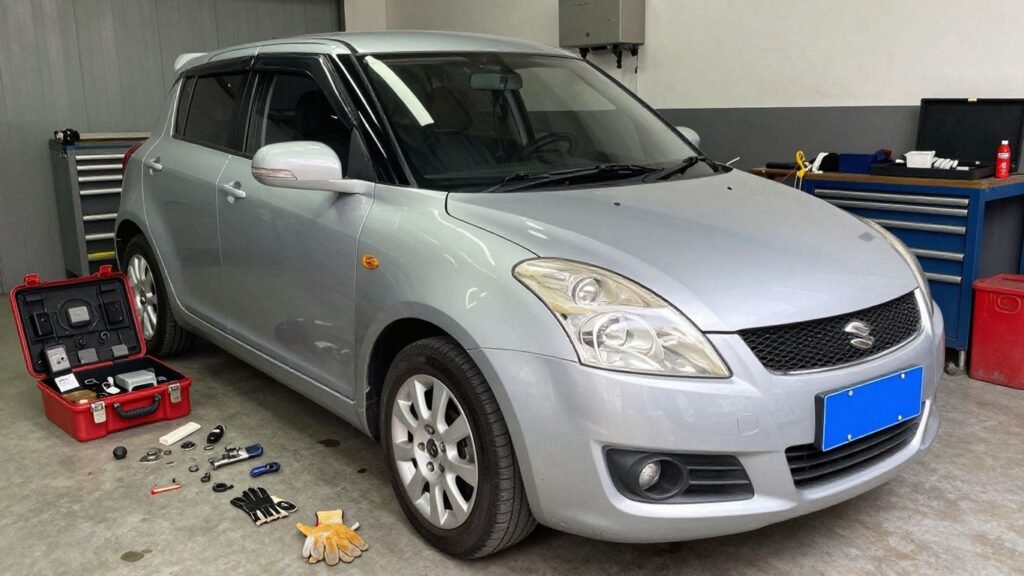
Swift parts for sale: How to find the right Suzuki Swift parts at the best price
Key Takeaways Finding Swift parts for sale is much easier when you start with exact vehicle details rather than price alone. A careful fitment check, seller review, and pre-installation inspection can prevent an expensive mismatch. Match the part to the Swift’s year, generation, trim, engine, and transmission. Use the VIN and part number to confirm compatibility whenever possible. Compare genuine, aftermarket, used, and refurbished options on total value. Check condition, returns, warranty coverage, and seller reliability before paying. Use proper tools and professional help for safety-critical or complex work. Identify the exact Suzuki Swift part you need A small difference between two Swift variants can affect whether a component fits. Before searching, write down the vehicle’s registration details, the failed part, and any number printed on the old component. That basic record gives you a much better starting point than a broad search for Swift parts for sale. Match the model year and generation Begin with the model year, then check which generation and body style you have. Swift designs can change across production periods, and a headlamp, bumper, mirror, or suspension component may look similar while using different mounting points. Photos are useful for comparison, but they should support—not replace—technical fitment information. If the car was built near a changeover year, ask the seller to confirm the production date or chassis range. This is especially helpful when listings use a general title such as “Suzuki Swift parts” without identifying the generation clearly. Use the VIN for precise fitment The VIN is one of the most reliable ways to narrow a parts search because it identifies the individual vehicle. Give it to the supplier when the listing offers a VIN-checking service, and keep the written confirmation with your order records. A written fitment confirmation can be valuable if the part later proves unsuitable. A VIN check is still worth requesting when the item appears universal. Sensors, wiring, control modules, and engine-related components can vary more than their photographs suggest. If a seller will not confirm compatibility, treat that uncertainty as part of the cost. For a second opinion before ordering, you can send a parts enquiry with the VIN and the old part number rather than relying on a vague product title. Confirm trim, engine, and transmission details Record the trim level, engine size, fuel type, transmission, and drivetrain layout. These details can affect brakes, axles, engine accessories, wiring, cooling components, and transmission-related parts. If you are unsure, the owner’s documents, service records, or identification plate may provide the answer. Do not assume that two cars with the same year and badge share every component. A seller should be able to explain which vehicle details their compatibility notes cover. When those notes are incomplete, ask a direct question before buying. Compare OEM, aftermarket, and used part numbers Part numbers provide a more dependable comparison than appearance alone. Check the number on the original item, any superseded number supplied by the manufacturer, and the number shown in the listing. A seller may list several compatible references, but you should still verify that the replacement is intended for your exact application. A simple comparison can help separate a genuinely suitable option from a merely similar one: Option What to compare Main question Typical concern Genuine OEM Original and superseded numbers Is it the correct factory specification? Higher purchase price Aftermarket Brand reference and application data Does the maker list your vehicle? Variable quality between brands Used Donor vehicle and visible number Is the part from a compatible Swift? Unknown wear or history Refurbished Reconditioning scope and warranty What was tested or replaced? Limited documentation Use the table as a screening tool, not as proof of fitment. The final decision should rest on the VIN, part number, and seller’s written compatibility information. Explore the main types of Swift parts for sale Swift parts cover everything from visible bodywork to small clips and electrical components. The right search category depends on the symptom, the damage, and whether you are restoring the car or simply keeping it roadworthy. Sorting the need into a system first makes listings easier to compare. Exterior body panels and lighting Body panels, grilles, mirrors, handles, bumpers, and lamps often need a careful visual match. Compare the side, mounting tabs, connector shape, lens design, and finish, not just the general silhouette. For painted panels, remember that the listed color may not match your car exactly without paint-code confirmation. Used exterior parts can be practical after minor damage, but ask about dents, repaired tabs, cracks, and previous paintwork. Lighting components deserve extra attention because moisture inside a lamp or a damaged adjuster can make an apparently clean item unsuitable. Engine, transmission, and drivetrain components Engine and drivetrain parts require more than a visual check. Identify the engine code, transmission type, and any relevant sensor or actuator reference before comparing listings. Gaskets, belts, mounts, shafts, pumps, and control components may have different specifications across variants. For a used mechanical part, ask how it was removed and whether its operating condition was tested. A low price is less appealing if installation requires repeating labor after an unverified component fails. Suspension, steering, and brake parts Suspension, steering, and brake parts influence how the vehicle responds and stops, so compatibility and condition take priority over cosmetic appearance. Check whether the listing is for one component or a complete axle set, and confirm left-versus-right orientation where relevant. Look closely at bushings, threads, seals, discs, caliper surfaces, and mounting points. New fasteners or related hardware may also be required, so include them in the search rather than discovering the omission halfway through the repair. Interior, electrical, and performance accessories Interior trim, switches, seats, instrument components, wiring, and convenience electronics can vary by trim level. Match connector style, control layout, color, and mounting arrangement. For modules, compatibility may depend on programming or vehicle configuration, so ask whether additional setup is needed. Performance accessories should be assessed for legal fitment, clearance, and effect on other systems. A part that