

Key Takeaways
Finding the right part starts with identifying the vehicle precisely, then checking the part number and fitment details before ordering.
- Sort the requirement by vehicle type and system before searching.
- Use the model, year, VIN, frame, engine, or outboard serial number together.
- Treat brakes, steering, drivetrain, cooling, and fuel components as fitment-critical.
- Compare genuine, aftermarket, and accessory options by purpose rather than price alone.
- Keep records of part numbers and maintenance dates for easier future servicing.
Understanding Suzuki parts categories
A category-first search makes a parts request less vague and reduces the chance of comparing unrelated components. Motorcycles, ATVs, utility vehicles, and outboard motors use different identification systems and have different maintenance priorities. Start with the machine, then narrow the search to the system that needs attention. That simple order is the foundation of Specific Suzuki Parts by Category.
Motorcycle and scooter components
Motorcycle and scooter requirements commonly fall into engine, drivetrain, braking, suspension, electrical, bodywork, or control-related groups. A chain component, ignition item, brake pad, and mirror may all be described as replacement parts, but they require different fitment checks. Record the exact model and year before browsing diagrams or supplier catalogues. For older machines, the original part number and a clear photograph can also help distinguish similar-looking pieces.
ATV and utility vehicle parts
ATV and utility vehicle parts often reflect heavier loads, slower operating speeds, and work-focused use. Engine and transmission components sit alongside axles, differentials, suspension, steering, racks, and protective equipment. The same broad vehicle family may have different specifications across model years or trim levels, so a visual match is not enough. Consider how the machine is used as well as what has failed when deciding what to inspect.
Outboard motor parts
Outboard components deserve their own category because the motor operates in a marine environment and depends on cooling, fuel, ignition, and lower-unit systems working together. Propellers, water-pump components, seals, filters, and maintenance items may look straightforward, yet small specification differences can affect fitment. Keep the motor model and serial information close at hand. That information is usually more useful than relying on appearance alone.
Genuine parts, aftermarket parts, and accessories
Genuine parts are generally selected by matching the manufacturer’s catalogue information to the vehicle identification details. Aftermarket alternatives can be sensible where specifications, quality, and warranty terms are clear. Accessories are a separate decision: a rack, guard, touring item, or control upgrade should be checked for compatibility rather than assumed to fit every machine in a range. Fitment comes before price when a part affects safety or reliability.
Finding the correct Suzuki part number
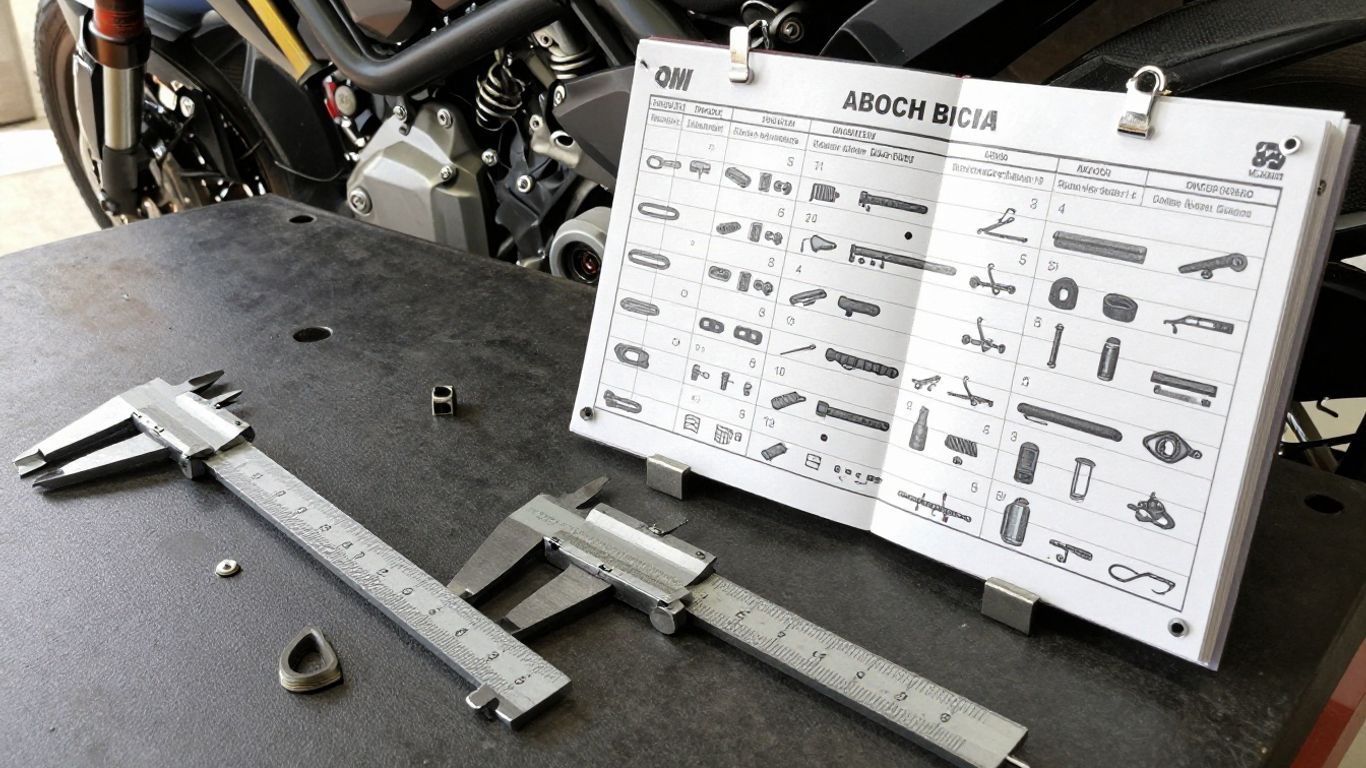
The part number is the bridge between a general repair need and a specific order. Model names alone may cover several revisions, markets, or production periods, while a small suffix can separate one component from another. Gather every identifier available before contacting a supplier. A few minutes spent reading the identification plate can prevent an expensive return.
Using the model and year
Begin with the full model designation, engine size where relevant, and model year. Do not rely only on the registration year, because a vehicle can be sold or registered after its production year. Note special variants, transmission types, wheel sizes, and regional specifications if they appear on the documentation. Once those details are recorded, search the relevant parts diagram and compare the item description with the component being replaced.
Reading VIN, frame, and engine numbers
A VIN or frame number can help separate vehicles that share a familiar model name. Engine numbers may provide another useful reference, particularly when an engine has been replaced or when the frame information is incomplete. Photograph the number in good light and transcribe it carefully, checking characters that are easy to confuse. When asking for help, provide the complete sequence rather than only the final few digits.
Decoding outboard serial numbers
For an outboard, record the model designation and the full serial number from the identification plate or engine documentation. The model identifies the motor family and configuration, while the serial number can distinguish production details that affect parts selection. Avoid guessing a model year from appearance, paint, or a boat’s paperwork. If the plate is damaged, inspect the motor and existing service records for a second source of identification.
Confirming fitment before ordering
Before placing an order, compare the listed part number, vehicle identifiers, side or position, quantity, and any superseded number. Ask whether a replacement number has taken the place of the number you found, and check whether related seals, clips, gaskets, or fasteners are sold separately. A supplier can work more accurately from complete information than from a description such as “the left-hand part.” For a direct parts enquiry, include photographs and the identification details in the first message.
Suzuki motorcycle and scooter parts
Motorcycle and scooter repairs are easier to manage when the symptom is separated from the system that may have caused it. A starting fault does not automatically mean the battery is at fault, just as a braking complaint may involve more than pads. Use the service information and inspect connected components before ordering. This keeps a narrow repair from becoming a collection of unnecessary parts.
Engine and drivetrain components
Engine and drivetrain work can involve filters, gaskets, seals, clutch components, drive chains, sprockets, belts, or transmission-related parts, depending on the machine. Check whether the part is intended for the exact engine and transmission configuration. When replacing wear items, inspect mating surfaces and nearby components so the new part is not installed alongside a worn cause of the original problem. Record the old number before discarding the packaging.
Brakes, suspension, and steering parts
Braking and steering parts require especially careful identification because position, dimensions, and system design matter. Confirm whether a component is front or rear, left or right where applicable, and whether the vehicle uses a particular caliper, disc, fork, or linkage arrangement. Suspension components also deserve an inspection for damage beyond the visibly failed item. If measurements are needed, use the service specification rather than estimating from a photograph.
Electrical and ignition components
Electrical and ignition faults can be intermittent, so replacing the first suspicious component may not solve the problem. Check battery condition, connectors, grounds, fuses, switches, coils, and wiring before selecting a replacement. Compare connector shapes and terminal arrangements, not just the outside dimensions. Keep old electrical parts until the repair is tested, since they may help diagnose a second fault if the symptom remains.
Bodywork, controls, and touring accessories
Bodywork and controls are often divided by colour, side, mounting point, or trim level. Mirrors, levers, cables, seats, panels, luggage components, and touring accessories should be matched to the exact mounting arrangement. A complete photograph of the vehicle can help clarify what is missing, but it should support—not replace—the model and year information. Cosmetic parts are also worth packing carefully, as a correct item can still be damaged in transit.
Suzuki ATV and utility vehicle parts
ATVs and utility vehicles may be used for recreation, property work, hauling, or seasonal tasks, and that use affects how parts wear. Mud, water, dust, heavy loads, and long periods of storage can all expose different weaknesses. Divide the inspection between the engine, transmission, drive system, chassis, and accessories. A clear maintenance history makes that process much more manageable.
Engine, transmission, and fuel system parts
Engine and fuel-system parts should be identified by model, year, engine specification, and—where available—the existing part number. Look for contamination, damaged hoses, blocked filters, and deteriorated seals before ordering a single replacement. Transmission components may also need careful inspection for wear patterns rather than simply replacing the most visible piece. Use clean containers and keep removed parts labelled during disassembly.
Drive, axle, and differential components
Drive, axle, and differential parts must be matched to the vehicle’s layout and specification. Check spline counts, shaft lengths, seals, bearings, and left- or right-side placement where relevant. A noise under load may originate in more than one location, so inspect the complete path from transmission to wheel. Replacing a seal without checking the bearing or shaft surface can leave the original leak unresolved.
Suspension, brakes, and steering parts
Suspension, brakes, and steering systems carry both safety and durability concerns on working machines. Examine bushes, ball joints, tie-rod ends, brake hardware, cables, and mounting points for play or corrosion. Confirm whether the vehicle has standard or variant equipment before ordering. After installation, check fasteners, movement, clearance, and brake operation in a controlled area before returning the machine to work.
Winches, racks, and protective accessories
Winches, racks, guards, skid plates, and protective accessories should be selected around the vehicle’s mounting points and intended load. Check whether the accessory needs a dedicated bracket or hardware kit. Work equipment can be exposed to impacts and weather, so inspect it regularly even when the main vehicle service is up to date. Accessories should support the machine’s use without obstructing controls, cooling, or routine access.
Suzuki outboard motor parts
Outboard maintenance is often preventative: a small cooling, fuel, or sealing issue can become more disruptive if ignored. Identify the motor first, then divide the work between the lower unit, cooling circuit, fuel and ignition systems, and routine service items. Rinse and storage practices matter as much as the replacement part itself. Keep the motor’s model and serial details with its service records.
Lower-unit and propeller components
Lower-unit work may involve propellers, hardware, seals, bearings, gears, or other related components. Check propeller size and specification, shaft condition, and the presence of fishing line or impact damage before ordering. A damaged propeller can conceal a bent shaft or additional lower-unit problem. Use the correct torque and installation procedure for the motor rather than relying on feel.
Cooling and water-pump parts
The cooling system deserves prompt attention when water flow is reduced, the motor runs unusually hot, or service intervals call for inspection. Water-pump components, gaskets, seals, and related passages should be matched to the exact motor identification. Inspect removed parts for corrosion and debris, and do not assume that a new impeller alone addresses every cooling fault. Test water flow safely after the work is complete.
Fuel, ignition, and electrical systems
Fuel, ignition, and electrical components should be approached as connected systems. Filters, hoses, connectors, plugs, coils, charging components, and switches can all affect starting and running behaviour. Check for degraded fuel lines, water contamination, loose terminals, and damaged insulation before selecting parts. Marine exposure makes corrosion a recurring concern, so clean and protect connections as part of the repair.
Maintenance kits and replacement accessories
Maintenance kits can simplify routine servicing when the contents match the motor model and service requirement. Confirm what the kit includes rather than assuming it contains every seal, filter, lubricant, or water-pump item needed. Replacement accessories such as anodes, propeller hardware, and storage items should also be checked against the motor specification. Keep unused parts sealed and labelled so they remain identifiable between service periods.
Buying and maintaining Suzuki replacement parts
A good purchase is not simply the cheapest listed item. It is the part that matches the machine, arrives in suitable condition, and can be supported by clear information if something is uncertain. Compare the evidence behind each option: identification, specifications, stock status, return terms, and warranty coverage. This approach is useful whether the job is a planned service or an urgent repair.
Choosing OEM parts for critical systems
For brakes, steering, drivetrain, cooling, fuel, and other critical systems, an OEM part can provide a straightforward reference point for fitment and specification. That does not remove the need to inspect the surrounding system or follow the correct installation procedure. Ask for the exact part number and any supersession information. The safest choice is the one supported by reliable identification and appropriate technical information.
Comparing aftermarket alternatives
Aftermarket parts can be considered when the manufacturer, specification, materials, dimensions, and support are clear. Compare the alternative with the original part number and verify that the stated application covers the exact model and year. Be cautious of listings that use a broad vehicle range without giving measurements or fitment notes. A modest price difference is less attractive if the part needs to be returned or replaced again.
The right comparison is between verified specifications, not between prices alone.
That principle is especially useful for parts hidden inside an assembly, where quality cannot be judged from a product photograph. Read the warranty and return conditions before ordering, and keep invoices and packaging until the repair has been tested.
Checking availability, pricing, and warranty coverage
Availability can change quickly, so ask whether an item is in stock, ordered in, or subject to a supplier lead time. Compare the total cost, including delivery, required hardware, and any related service items. Warranty coverage should be read for duration, exclusions, installation requirements, and the evidence needed if a claim is made. Clear communication at this stage prevents surprises after payment.
Storing parts and planning routine maintenance
Store rubber, seals, electrical items, and filters in clean, dry conditions away from heat, sunlight, fuel, and corrosive substances. Keep labels with the part and write down the vehicle, date purchased, and intended position. Plan maintenance around operating hours, distance, season, and storage conditions rather than waiting for a failure. A simple record of part numbers and service dates makes the next search faster and more accurate.
Conclusion
Specific Suzuki Parts by Category is a practical way to turn a broad repair request into a precise parts search: identify the machine, confirm its numbers, match the system and position, and then compare supported options. When you need help sourcing a suitable component, contact the parts team with the model, year, identification numbers, photographs, and the part number you are trying to verify.