

Key Takeaways
A replacement engine is only a good purchase when its identity, condition, compatibility, and delivered cost all make sense together.
- Match the engine code, model year, displacement, and application before comparing prices.
- Treat mileage, testing, service history, and included components as part of the engine’s value.
- Compare used, rebuilt, and remanufactured options against the vehicle’s expected service life.
- Confirm shipping, installation, seals, fluids, accessories, and warranty terms before paying.
- Photograph and document the engine before delivery, then follow careful installation and startup procedures.
Identify the right Suzuki engine for your vehicle
The first step in choosing among used Suzuki engines for sale is identifying exactly what your vehicle requires. A similar-looking engine may differ in mounts, sensors, control systems, or emissions equipment. Start with the vehicle identification number, model year, engine size, and the details recorded on the original engine. That basic information gives you a reliable filter before you speak with a seller.
Match the engine to the Suzuki model and year
Model names can cover several generations, and a change between years may affect wiring, brackets, programming, or accessories. Record the exact model, body style, production year, and transmission before searching. If the vehicle has already had an engine replacement, check its current identification rather than assuming it still matches the factory configuration.
A seller should be able to explain why a proposed engine fits that particular model and year. Ask for the donor vehicle details and compare them with your registration or service records. The more specific your request, the less likely you are to receive a broadly labelled engine that requires expensive changes.
Confirm engine type, displacement, and power output
Displacement and power output are not interchangeable details. Confirm whether you need a petrol or diesel engine, the number of cylinders, the displacement, and the relevant power specification. Also check whether the advertised figure refers to the engine itself or to a complete vehicle configuration.
Use the original documentation and the engine label to settle any disagreement between a listing and a seller’s description. Exact specifications matter because a small difference can affect the ECU, exhaust, cooling system, and registration requirements.
Distinguish automotive, outboard, and motorcycle engines
Suzuki engines appear in automotive, marine, and motorcycle applications, but those applications are not automatically interchangeable. An outboard engine has a marine installation context, while a motorcycle engine may include a different frame interface, gearbox arrangement, and control layout. An automotive replacement must be assessed against the vehicle’s mounts, transmission, wiring, and emissions systems.
State the application plainly when requesting a quotation. If you are sourcing a marine engine, include the boat and lower-unit details; for a motorcycle, include the exact model and trim. This prevents a search for a generic Suzuki engine from returning the wrong type of assembly.
Use the engine code to verify compatibility
The engine code is usually more useful than a broad model label. Compare the stamped or labelled code on the replacement with the code in the workshop documentation, and ask for a clear photograph if the listing does not show it. Where codes differ, ask what changes are required rather than relying on a statement that the engine is “close.”
A reputable seller should also clarify whether the engine is supplied as a long block, a complete assembly, or a package with accessories. You can browse Suzuki engines after gathering these identifiers, but the search should follow your specifications, not replace them.
Compare used, remanufactured, and rebuilt Suzuki engines
Price comparisons are more useful when the engine categories are clearly separated. A used engine may be a complete assembly removed from a donor vehicle, while a rebuilt or remanufactured unit has undergone varying levels of inspection and replacement. The labels are not interchangeable, so ask what work was actually performed. Your decision should reflect both the repair budget and how long you plan to keep the vehicle.
What to expect from a used engine
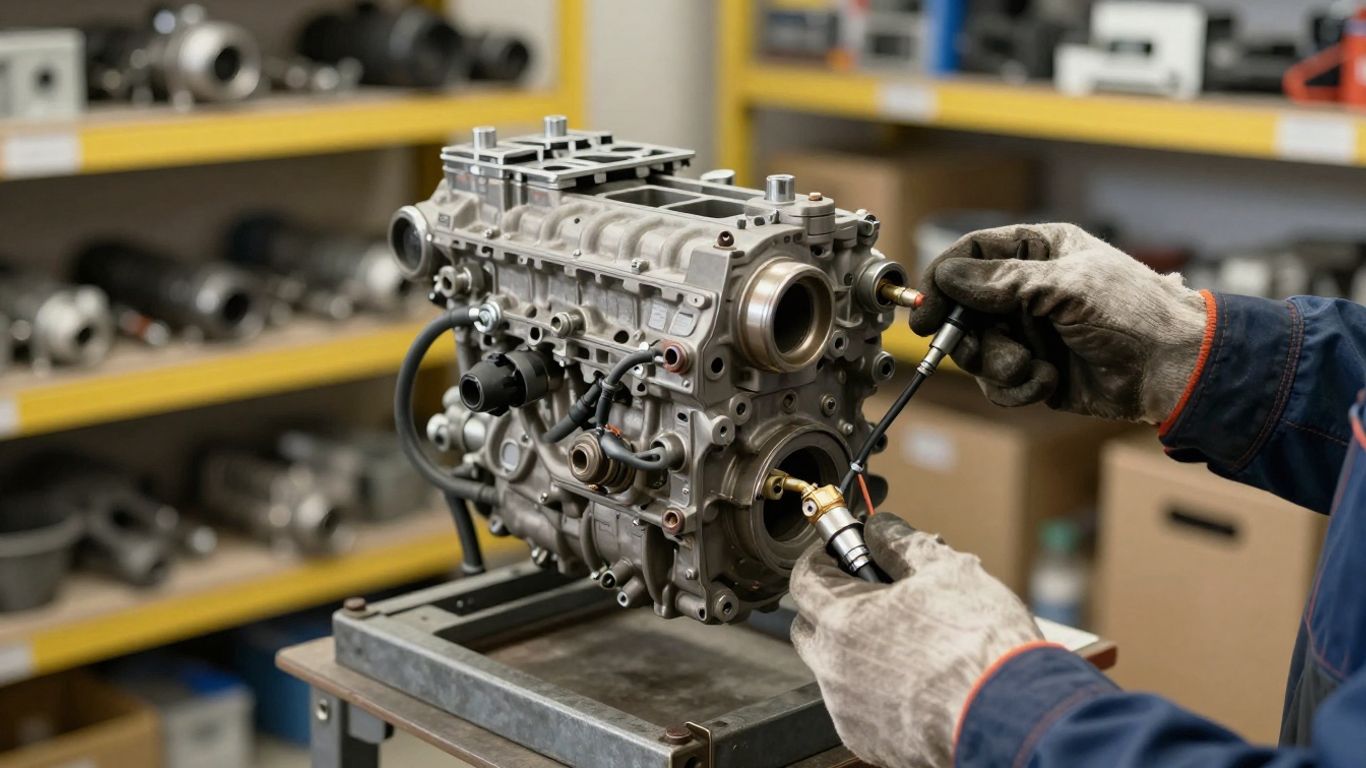
A used engine generally retains the history of the vehicle from which it was removed. That can make it a practical option when the donor mileage, operating conditions, and service records are known. It may also arrive with some accessories, but those inclusions vary widely between listings.
Ask whether the engine was running before removal, whether its mileage is documented, and whether the seller guarantees that it turns freely. The lower purchase price can be attractive, but unknown history increases the importance of inspection and a clear return policy.
How remanufactured engines differ
A remanufactured engine is typically processed through a defined inspection and machining program, but the exact scope depends on the supplier. Do not assume every internal or external component has been replaced. Request a written description of the work, the parts renewed, the testing performed, and the warranty conditions.
The value of this option lies in documented preparation rather than the label alone. Compare the paperwork and coverage with the price of a used unit, including any restrictions on installation or required maintenance.
When a rebuilt engine may be the better choice
A rebuilt engine can suit a vehicle whose original unit is valuable, unusual, or difficult to replace. It may allow a technician to retain a compatible block while correcting the specific wear that caused the failure. The result depends heavily on the rebuilder’s methods, measurements, parts selection, and final testing.
Ask which components were inspected, which were replaced, and what tolerances were checked. A detailed build sheet is more useful than a general assurance that the engine has been rebuilt.
Balance upfront price with expected service life
Compare the purchase price with the likely installation effort, warranty period, and evidence supporting the engine’s condition. A cheaper unit may require more transferred parts or additional diagnosis, while a higher-priced option may include testing and broader coverage. Neither price alone proves value.
A simple comparison should include the engine, freight, labour, fluids, seals, filters, and possible follow-up work. If the vehicle is used every day, downtime also has a practical cost that belongs in the decision.
| Option | Useful evidence to request | Main cost question | Typical risk to investigate |
|---|---|---|---|
| Used | Donor details, mileage, test results | Is the lower price worth unknown wear? | History and included parts |
| Rebuilt | Build sheet, machining details, warranty | What work is included in the quoted price? | Quality of rebuilding work |
| Remanufactured | Process description, test records, coverage | Does the warranty justify the premium? | Exclusions and installation conditions |
This comparison keeps the category names tied to evidence. It also gives you a sensible structure for comparing quotations from Just Suzuki with other available purchasing routes without treating a label as a guarantee.
Evaluate engine condition before buying
Condition is more than a mileage figure. A low-mileage engine can still have corrosion, storage damage, contamination, or a neglected cooling system, while a higher-mileage unit with consistent servicing may be easier to assess. Ask for records and test evidence before treating an engine as ready to install.
The strongest inspection combines documents, photographs, seller answers, and an independent mechanical opinion where practical. If those sources conflict, pause the purchase until the discrepancy is explained.
Review mileage, operating hours, and service history
For automotive engines, confirm recorded kilometres or miles and ask how they were documented. Marine engines require operating hours and details about saltwater exposure, while motorcycle engines may have a different service pattern. The application changes what the numbers mean.
Look for evidence of oil changes, cooling-system work, timing components, and previous overheating. A service history does not eliminate risk, but it helps you judge whether the engine’s condition is consistent with the advertised use.
Inspect compression, leaks, corrosion, and physical damage
Ask whether compression was measured and request the readings for each cylinder when available. Check photographs for oil or coolant residue, damaged housings, cracked brackets, corrosion around ports, and signs of impact. A clean exterior is not proof of sound internals, but obvious damage is a reason to investigate further.
If an inspection is possible, have a qualified technician look at the crankshaft rotation, fluids, seals, mating surfaces, and attachment points. Do not rely on a pressure-washed appearance to answer mechanical questions.
Ask whether the engine was tested before removal
A running test before removal can provide useful evidence, especially when the seller records oil pressure, compression, starting behaviour, and unusual noise. Ask what was tested, when it was tested, and whether the results belong to the exact engine being offered. A generic statement that engines are checked is not enough.
A test result is useful only when it is tied to the exact engine, the test method, and the date.
That detail makes the evidence easier to evaluate. If the engine was removed from a damaged vehicle, ask whether the damage could have affected the cooling, lubrication, electrical, or fuel systems before the removal test.
Understand what components are included
The phrase “complete engine” can mean different things. One seller may include the intake, alternator, starter, sensors, and injectors; another may supply only the long block. Ask for a component-by-component inventory and compare it with the parts on your original engine.
This is also where photographs help. A written list prevents surprises, while pictures reveal missing brackets, broken connectors, or accessories that were removed before storage.
Find reputable sellers of used Suzuki engines
Seller quality affects the information you receive as much as the engine itself. A business that records donor details and answers technical questions clearly gives you more to work with than a listing built around a single price. Just Suzuki positions its business around connecting customers with quality used, genuine, and aftermarket parts through a broad car parts network.
Still, perform your own checks. A good buying process leaves a record of the engine identity, condition, price, freight, warranty, and agreed inclusions before money changes hands.
Compare dealers, salvage yards, recyclers, and private sellers
Dealers and recyclers may have organised inventory and established shipping processes, while a private seller may offer a lower price but less documentation. Salvage operations can provide donor vehicle details and related parts, though the condition of each component still needs to be confirmed. Compare the information supplied, not only the source category.
Ask who owns the engine, where it was removed, and who will handle a warranty claim. The answer should be clear enough that you know whom to contact if the delivered unit does not match the listing.
Check reviews, business details, and inventory information
Look for a consistent business identity, working contact details, a physical or service location, and inventory descriptions that contain more than generic stock language. Reviews are useful as a pattern, not as proof of a particular engine’s condition. Check whether customers mention communication, packaging, accuracy, and resolution of problems.
Just Suzuki serves customers across Melbourne, Sydney, Brisbane, and nationwide, so ask how freight and support will work for your location. The practical question is whether the seller can provide traceable information and respond when a technical issue arises.
Verify warranties, return policies, and buyer protections
Read the warranty before paying. Confirm its duration, covered parts, labour treatment, exclusions, installation requirements, and process for reporting a fault. A warranty may be void if the engine is installed without specified fluids, filters, testing, or professional documentation.
Also clarify the return window and who pays for freight if the engine is incorrect or damaged. Keep the listing, invoice, messages, photographs, and test documents together so the agreement is easy to demonstrate.
Request photos, videos, and identification numbers
Request current photographs of the exact engine, including the code, mounting points, connectors, ports, and any visible damage. A start-up video may be helpful when available, but it should identify the engine and show enough of the test to be meaningful. Stock photographs should not be treated as condition evidence.
Ask the seller to confirm that the identification numbers in the photos match the invoice. That small step reduces the chance of receiving an engine from a different listing.
Calculate the total cost of a replacement engine
The advertised engine price is only one part of the replacement budget. Freight, packaging, taxes where applicable, workshop time, fluids, seals, filters, and transferred accessories can materially change the final figure. Build the estimate before choosing between two apparently similar engines.
A written quote is easier to compare than several separate messages. Ask the seller to state what is included, what is optional, and what remains your responsibility.
Compare the engine price with shipping charges
Heavy engines can attract substantial freight charges, and remote delivery may add handling or depot fees. Confirm the pickup and delivery locations, packaging method, insurance, and estimated transit time. Ask whether the quoted freight includes tail-lift or curbside delivery requirements.
A lower engine price may disappear once shipping is added. Compare the delivered total, not the number shown at the top of the listing.
Budget for installation, fluids, seals, and filters
Installation may require new gaskets, seals, belts, hoses, filters, oil, coolant, and other consumables. Labour can also include diagnosis, cleaning, transfer of accessories, programming, and post-installation checks. Ask the workshop for a separate estimate for removal and refitting so the quote is easier to review.
Do not automatically reuse service items from the failed engine. Fresh fluids and appropriate filters are usually part of a controlled startup plan, subject to the vehicle manufacturer’s requirements.
Account for missing accessories and compatible parts
An engine supplied without its starter, alternator, intake, exhaust pieces, sensors, or wiring may still be usable, but transferring those parts takes time and can expose additional faults. Identify every missing component before purchase. Then price replacement parts using the exact engine and vehicle details.
This is an area where a broad parts network can be useful, but compatibility must still be checked part by part. Treat every accessory as a separate line in your estimate rather than assuming it will transfer.
Estimate the cost of professional inspection or installation
A technician can inspect the replacement before installation and may identify incompatible mounts, damaged threads, missing sensors, or storage issues. Professional installation may also provide documentation that supports a warranty claim. The cost is easier to justify when it prevents a second removal and refitting job.
Get the inspection and installation terms in writing. If the seller requires professional installation, confirm what evidence must be retained and whether the workshop must follow a particular procedure.
Inspect compatibility and included components
Compatibility extends beyond the engine block. Electrical architecture, emissions equipment, fuel delivery, transmission interfaces, and physical clearances can all determine whether a replacement is genuinely suitable. Before payment, compare the offered assembly with the original engine in photographs or in person.
A component checklist is especially useful when a seller offers several versions of the same engine. It turns a vague match into a set of questions that can be answered and recorded.
Verify mounts, sensors, wiring, and control modules
Compare mounting locations, sensor types, connectors, wiring branches, and control modules. A replacement may physically fit while still requiring different electronics or programming. Ask whether the ECU or other control hardware is included and whether it belongs with the offered engine.
Photograph the original connections before removal if possible. Those images give the technician a reference and help the seller identify missing or incompatible items.
Check whether the intake, exhaust, and fuel systems are included
Confirm whether the intake manifold, throttle body, injectors, fuel rail, exhaust manifold, turbocharger where applicable, and related pipes are included. Even when these pieces can be transferred, their condition may affect the final cost. Ask about damage to threaded holes and sealing surfaces.
Use the original engine as a visual reference, but do not assume every attached component is interchangeable. The engine code and vehicle configuration should guide the final decision.
Confirm compatibility with the transmission or lower unit
For a car, compare the bellhousing pattern, flywheel or flexplate arrangement, crankshaft position, and transmission interface. For an outboard, confirm the relationship with the lower unit, shaft length, controls, and mounting arrangement. These are application-specific checks, so a general “Suzuki fit” statement is not sufficient.
Ask the seller for measurements or photographs when the interface is not obvious. Resolving that question before shipping is far cheaper than returning a heavy engine.
Identify parts that must be transferred from the original engine
Make a written transfer list before the workshop begins. It may include brackets, sensors, manifolds, wiring, pulleys, covers, mounts, and control components, depending on the application. Inspect each transferred part rather than treating it as automatically serviceable.
The list also helps separate the engine’s price from the total replacement cost. If several original parts failed with the old engine, include their replacement in the budget now.
Complete the purchase and installation safely
A careful purchase ends with more than a payment confirmation. Preserve the listing and the agreed specifications, plan for safe freight, and inspect the delivery before the engine is installed. Good records make it easier to resolve a mismatch and give the technician a clear starting point.
Just Suzuki focuses on making parts sourcing fast and affordable across major Australian cities and nationwide. Whether you buy through that service or another route, the same documentation and installation discipline protects the investment.
Document the engine details before payment
Save the quotation, engine code, donor information, mileage or hours, photographs, test results, included components, price, freight terms, and warranty. Ask the seller to confirm any verbal promises in writing. If the listing changes, retain the earlier version as well.
Pay through a method that provides a transaction record and review the invoice before authorising it. The invoice should describe the actual engine, not only a generic category.
Arrange secure shipping and inspect the delivery
Confirm that the engine will be drained as required, capped against contamination, secured to a suitable pallet, and protected from impact. Ask how damage claims must be reported and how quickly photographs are needed. On arrival, photograph the packaging before opening it.
Compare the delivered engine with the saved photographs and identification details. Record dents, broken connectors, fluid leaks, or missing accessories immediately and contact the seller before attempting installation.
Follow proper installation and startup procedures
Use a qualified technician when the work involves complex electronics, programming, fuel systems, or heavy lifting. Clean mating surfaces, replace required seals and filters, fill the correct fluids, and verify electrical connections before startup. The workshop should follow the vehicle or engine manufacturer’s service information for timing, torque, priming, and initial checks.
Do not treat a successful first start as the end of the process. Check for leaks, abnormal noise, warning lights, overheating, and correct fluid levels while the engine is monitored.
Track break-in service and warranty requirements
Record the installation date, mileage or hours, fluids used, filter part numbers, test results, and any follow-up adjustments. If the supplier specifies an early oil change, inspection, or break-in procedure, add it to the service record. Keep receipts and workshop notes with the warranty documents.
Respond to symptoms promptly rather than continuing to drive or operate the engine until a small issue becomes a major one. A clear timeline helps both the technician and seller determine what happened.
Contact Just Suzuki
If you are ready to compare suitable replacement options, contact Just Suzuki with the vehicle details, engine code, location, and components you need. Providing that information upfront can make the search faster and the quotation more useful.
Conclusion
Choosing a used Suzuki engine is a process of verification rather than guesswork: identify the exact application, compare the evidence behind each engine category, calculate the delivered installation cost, and document every agreement. With those checks in place, you can make a more confident purchase and give the replacement engine the careful installation and service it needs.