

Key Takeaways
A careful buying process helps you find dependable parts without paying more than necessary.
- Confirm the Alto’s year, generation, engine, transmission, and trim before requesting a part.
- Compare recycled OEM, rebuilt, reconditioned, aftermarket, and new alternatives fairly.
- Ask how a part was tested, where it came from, and what warranty applies.
- Treat brakes, steering, suspension, airbags, and electronic safety components with extra caution.
- Include freight, taxes, fitting, returns, and installation in the final cost.
Understand what Suzuki Alto wreckers offer
Suzuki Alto wreckers can provide a practical source of used components when a replacement is no longer available through ordinary parts channels. The appeal is not simply a lower sticker price; a matching original component may also save time during installation. Still, every used part has a history, so condition and compatibility matter as much as cost. Start by understanding what kind of part you are actually being offered.
Recycled OEM parts versus aftermarket replacements
A recycled OEM part was made for the vehicle and removed from another Alto, while an aftermarket replacement is produced by a separate manufacturer for the same application. The first may offer a closer physical and electrical match, but it is not automatically in perfect condition. The second may be new and well priced, though fit, finish, and included hardware can vary. Ask for the original part number and compare the warranty rather than choosing on price alone.
Common Suzuki Alto parts available from wreckers
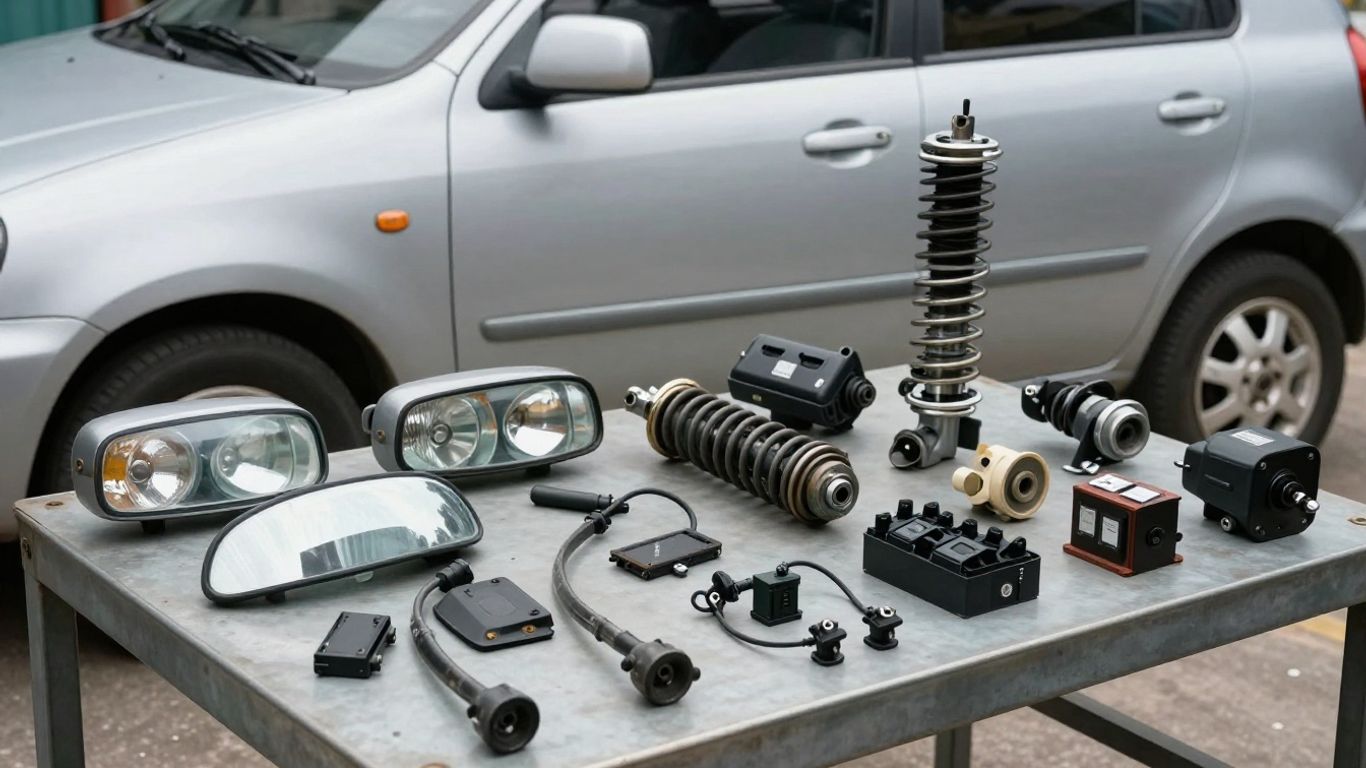
Availability depends on the vehicles recently dismantled, but wreckers commonly handle body panels, mirrors, lights, interior trim, wheels, glass, switches, motors, and selected mechanical components. Ask whether the listed item is complete or missing brackets, wiring, keys, sensors, or mounting hardware. A photograph of the actual part is more useful than a generic model image. The actual part matters more than a broad promise that something is “in stock.”
Used, rebuilt, and reconditioned part differences
Used means the component has been removed from a vehicle and is being sold in its existing condition, subject to whatever inspection the seller performs. Rebuilt usually means it has been disassembled and repaired with replacement parts, while reconditioned suggests cleaning, checking, and restoring it to an acceptable working condition. These terms are not interchangeable, so ask what work was completed and what was measured. Written details make different quotes easier to compare.
When a salvaged part may not be suitable
A salvaged component may be a poor choice if it has corrosion, water damage, heat exposure, missing safety hardware, or an uncertain service history. Cosmetic wear may be acceptable for a trim panel but not for a mounting point or a mechanical assembly. If the original failure could have affected related components, replacing only the visible item may not solve the problem. A mechanic’s opinion is worthwhile when the fault is unclear.
Identify the correct Suzuki Alto part
Ordering by “Suzuki Alto” alone is risky because details can change across years, markets, engines, transmissions, and trim levels. Give the wrecker enough information to narrow the search before a quote is issued. Keep photographs of the old part and its connectors nearby when calling. This small amount of preparation can prevent an expensive mismatch.
Confirm the model year and generation
Check the registration information, build plate, service records, and the vehicle itself rather than relying on memory. A car’s registration year may differ from its build year, and apparently similar Altos can use different components. Record the month and year of manufacture if available. Mention any facelift or specification change that applies to your vehicle.
Use the vehicle identification number
The VIN gives the seller a stronger reference than a general model description. Provide the complete number through a trusted sales channel and ask the wrecker to confirm the application before payment. It may help identify production details, but it does not replace checking the component itself. For electronic parts, also provide fault codes and connector photographs where relevant.
Match engine, transmission, and trim specifications
Engine size, cylinder configuration, transmission type, drive layout, and trim can affect sensors, mounts, axles, instrument panels, and wiring. A part from a manual car may not suit an automatic version even when the body looks identical. Tell the seller whether the car has factory options that affect the item. The more specific the request, the less room there is for assumption.
Compare part numbers before purchasing
Read the number from the removed part if it is still legible, then ask for the number on the replacement. A superseded number may be compatible, but that should be confirmed by the seller or a qualified technician. Do not treat a similar-looking housing as proof of interchangeability. Save photos of both labels and connectors with your purchase records.
Evaluate a wrecker’s reputation and inventory
A reliable seller should make it reasonably easy to understand what is available, what condition it is in, and what happens if it does not fit. Reputation is useful, but it should be supported by clear answers and consistent stock information. A polished website alone does not establish quality. Look for a buying process that leaves a sensible paper trail.
Check licensing, reviews, and business history
Check the business name, contact details, trading history, and customer feedback before sending payment. Reviews are most useful when they describe communication, packaging, accuracy, and returns rather than simply praising low prices. Ask whether invoices identify the exact part supplied. If the seller avoids basic questions, move on before the transaction becomes difficult to unwind.
Look for accurate stock descriptions and photos
A useful listing should identify the model, year range, body style where relevant, condition, and included pieces. Photos should show the actual item from several angles, including labels, connectors, damage, and wear. Generic images can conceal differences between variants. Request another photograph if the important mounting or identification area is not visible.
Ask about testing and quality-control procedures
Ask what was tested, when it was tested, and whether the result is recorded against the part. “Checked” can mean anything from a visual inspection to a functional bench test, depending on the component. For electrical items, ask about diagnostic testing and known fault symptoms. Clear answers do not guarantee perfection, but they make the seller’s standard easier to judge.
Verify whether parts are sourced locally or shipped in
A locally held part may be available for inspection or quicker collection, while an item sourced from another yard may involve extra handling and freight time. Confirm who is responsible for packing, damage claims, and return shipping. Just Suzuki lists service Australia wide, so a buyer can ask its team how delivery arrangements apply to a particular order. Do not assume that “available” means the component is already at the dispatch location.
Compare prices and total purchase costs
The cheapest quote is not necessarily the lowest-cost repair. A fair comparison includes the part’s condition, warranty, delivery, taxes, fitting, and the risk of ordering incorrectly. Ask each seller for the same specification so the figures are genuinely comparable. This is especially important when several listings use broad descriptions for slightly different components.
Request quotes from multiple Suzuki Alto wreckers
Send the same information to several Suzuki Alto wreckers: VIN, model year, engine, transmission, part number, photographs, and delivery postcode. Ask for the price, condition grade, warranty period, availability, and expected dispatch time in writing. One seller may quote a bare component while another includes brackets or a tested assembly. A consistent request reveals those differences quickly.
Factor in shipping, core charges, and taxes
Freight can materially change the cost of a bonnet, engine, gearbox, glass item, or bulky interior component. Ask whether the quote includes packaging, insurance, taxes, and a refundable core charge for the old unit. Confirm the delivery address and whether someone must be present. Just Suzuki’s published contact details include Australia-wide service, but the exact freight cost still needs to be confirmed for each item.
Compare used parts with new and aftermarket options
A used original part may be sensible when a new dealer component is costly or discontinued, but a new aftermarket item can sometimes offer a clearer warranty. Compare like with like: a tested used assembly should not be judged against an incomplete shell. Include installation time and the cost of returning a wrong part. The better choice is the one with the strongest overall value for this particular repair.
Calculate the value of rare or discontinued components
Scarcity can make a used part valuable, but rarity should not excuse vague condition information. For a discontinued trim piece, unusual switch, or matching interior component, consider whether repair or refurbishment is possible. For a major mechanical unit, factor in seals, fluids, labour, and diagnostic work after installation. A slightly higher quote may be reasonable when it includes testing and a meaningful return option.
| Cost item | Question to ask | Why it matters |
|---|---|---|
| Part price | Is the item complete and tested? | Prevents misleading comparisons |
| Freight | What is included in delivery? | Large parts can change the total substantially |
| Core charge | Is an old unit required in return? | A refundable charge affects upfront cash |
| Installation | Who will fit and verify it? | Labour and diagnosis may exceed the saving |
Use the completed figure, not the headline part price, when deciding whether the purchase is worthwhile. Keep the quote until the part arrives so unexpected charges can be checked against what was agreed.
Inspect safety-critical Suzuki Alto parts
Safety-related components deserve a higher standard of scrutiny than cosmetic items. A small amount saved on a trim panel is rarely worth the risk of accepting an unknown brake, restraint, or steering component. Ask what inspection is appropriate before purchase and who will perform it. If the history is uncertain, replacement with a verified component may be the safer financial decision as well.
Assess brakes, steering, and suspension components
Check brake calipers, master cylinders, steering parts, control arms, hubs, and suspension components for corrosion, impact damage, leaks, bent mounting points, and excessive play. Wear items such as pads, bushes, seals, and bearings may need replacement even when the main assembly appears usable. Have a qualified technician inspect parts that influence wheel control. A clean appearance is not proof of safe operation.
Check airbags, seat belts, and electronic safety systems
Treat airbags, belt pretensioners, seat-belt assemblies, impact sensors, and related modules as specialist components. Ask whether the donor vehicle was involved in a collision and whether any restraint system warning was present. Do not install a component simply because its plug matches. Compatibility, deployment history, and post-installation diagnostics all need professional attention.
Understand which parts should be professionally tested
A qualified technician should assess components where hidden damage, calibration, or electrical faults could affect safety. This includes restraint modules, steering assemblies, brake hydraulics, advanced sensors, and some control units. Ask for the required calibration procedure before buying, because the part may not be usable without additional equipment. Professional testing is part of the purchase cost, not an optional extra.
A used safety component is only a sensible bargain when its identity, condition, and installation requirements are clear.
That principle applies even when the seller is experienced and the part looks undamaged. If the testing history cannot be established, choose a better-documented alternative and keep the decision conservative.
Avoid damaged components from severely crashed vehicles
Do not buy structural, steering, restraint, or suspension parts from a severely crashed donor unless their suitability has been independently established. Impact forces can travel beyond the visibly damaged area. Water, fire, and prolonged exposure can create less obvious problems too. Ask for donor-vehicle photographs when the part’s history affects safety or alignment.
Complete the purchase and installation carefully
The transaction is not finished when the payment clears. Confirm the written terms, inspect the delivery, and compare the received item with the quote before it is fitted. A careful process gives you a chance to identify damage or a mismatch while return options remain open. It also helps the installer work from accurate information.
Confirm the warranty and return policy
Ask how long the warranty lasts, what it covers, and whether labour is included. Clarify the process for reporting a faulty part and whether returns are accepted for incorrect fitment, change of mind, or only verified faults. Some sellers require the part to remain unmodified and may request diagnostic evidence. Keep these conditions with the invoice rather than relying on a phone conversation.
Choose pickup, delivery, or freight shipping
Pickup lets you inspect a component and may reduce freight risk, while delivery is more convenient for parts held at a distance. For large or fragile items, ask how the part will be wrapped, strapped, and insured. Photograph the packaging before opening it and record any visible damage immediately. If you arrange freight yourself, confirm whether that affects the seller’s responsibility for transit claims.
Have compatibility confirmed before installation
Before fitting, compare the part number, connectors, brackets, dimensions, and included hardware with the original. Send photographs to the seller or installer if anything differs. Do not modify a component merely to make it fit unless a qualified professional confirms that the change is safe and appropriate. Just Suzuki can be contacted about the vehicle-part request, while the final mechanical or electrical approval should come from the installer responsible for the repair.
Keep records for future repairs and resale value
Save the invoice, donor details if supplied, part number, warranty, photographs, and installation date. Record any calibration, fluid change, or associated repair completed at the same time. These notes can prevent repeated research during the next fault and give a future buyer clearer maintenance information. Good records also make a warranty conversation much easier.
Conclusion
Finding reliable Suzuki Alto wreckers is mostly a matter of slowing down: identify the exact vehicle and part, question the condition and testing, compare the complete cost, and treat safety-related components with professional caution. When you are ready to discuss a suitable part or Australia-wide service, contact Just Suzuki with the VIN and part details; you can also use the Just Suzuki contact service to begin the conversation before ordering.