
Key Takeaways
Navigating the world of motorcycle salvage requires focus, but it offers a sustainable path to keeping your bike roadworthy. These points cover the essentials of working with wreckers:
- Researching the reputation of a facility ensures you receive fair service.
- Compatibility knowledge helps in finding parts for older motorcycle models.
- Using professional courier networks simplifies obtaining parts from across the country.
- Preparing necessary documentation is vital when you are selling a wreck.
- Inspecting components thoroughly protects your personal safety on the road.
Choosing a reputable Suzuki bike wrecker
Finding a trustworthy yard is essential for anyone restoring or maintaining a bike. You want to prioritize businesses that have a long-standing history of dealing with specific manufacturers, as they often understand the nuance of each frame and engine configuration.
Checking online reviews and business reputation
Public feedback serves as a primary indicator of a wrecker’s reliability. Look for consistent patterns in client communication, fast turnaround times, and clear policies regarding returns if a part arrives in worse condition than expected. It is a cost-effective way to maintain your motorcycle when you engage with teams that demonstrate genuine professional integrity.
A reputable dismantler provides clarity on the provenance of every recovered assembly, ensuring the service history matches the condition of the mechanical components you receive.
By carefully reading these narratives from fellow riders, you filter out substandard services and focus on reliable suppliers.
Verifying inventory accuracy for specific models
Maintaining a precise digital inventory is a hallmark of a high-quality wrecker. When you call an outlet, they should be able to cross-reference your specific VIN or frame number with their database to confirm a component is a direct fit for your bike’s production year. Relying on gut feelings is rarely sufficient when dealing with complex electrical systems or frame-specific mounting points.
Understanding quality grading for salvaged parts
Most professional yards implement a grading system to help buyers understand what to expect. Common categories include "Tier A" for near-new components, "Tier B" for parts with cosmetic wear but perfect function, and "Tier C" for items requiring external restoration. Understanding these grades prevents disappointment and ensures you are paying the correct price for the condition of the item.
How to source rare or discontinued Suzuki motorcycle parts
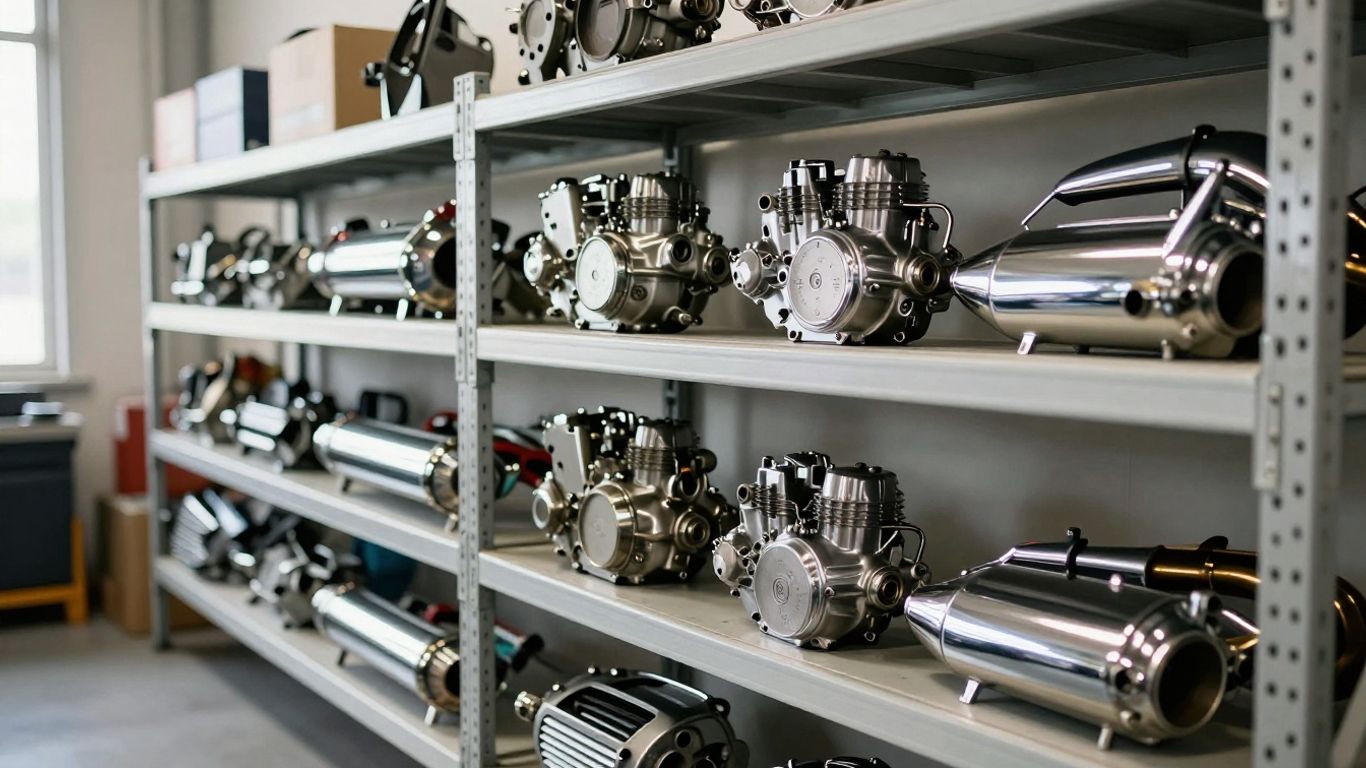
Sourcing parts for vintage machines often feels like a treasure hunt. When local inventory is exhausted, riders must often expand their search parameters significantly.
Identifying compatible parts across different model years
Suzuki frequently carried over engine architectures and chassis components between model variations, which can be a huge benefit for owners of older bikes. By consulting service manuals, you may discover that a part from a later model fits your older machine perfectly. This compatibility insight can mean the difference between a successful project and finding a replacement that ultimately sits on a shelf.
Utilizing national courier networks for interstate deliveries
Distance is no longer the barrier it once was for finding specific salvaged hardware. Many specialized yards participate in national freight networks that allow them to ship heavy engines or delicate body panels securely. If you need assistance finding a specific component, you can Contact Just Suzuki to discuss their current reach and shipping capabilities across Australia.
Negotiating fair pricing on salvaged components
While market prices for rare items are often established by scarcity, there is usually room for professional discussion when purchasing multiple items at once. Being ready to provide clear information on the item’s condition and demonstrating that you have researched current market rates is a good starting point for any price-related inquiry.
The process of selling a wrecked Suzuki motorcycle
When a bike is beyond repair, selling it to a wrecker is often the most financially sound decision. It turns a liability sitting in your garage into cash that could fund your next project.
Preparing your bike for salvage valuation
Clear off any accessories you plan to keep before requesting a quote. A clean bike is easier for professional appraisers to evaluate, allowing them to accurately identify usable components. Providing a concise summary of the accident history often speeds up the valuation process, as it allows the salvage team to determine which internal systems remain intact.
Documentation requirements for ownership transfer
Transferring a wrecked machine requires the same legal care as selling a running bike. You must provide a valid proof of ownership, such as the original title or registration papers. Always keep a copy of the transfer documentation for your records, as this protects you from potential liability issues that might arise after the machine has moved to the salvage yard.
Handling registration cancellation and title paperwork
Once the sale is finalized, it is your responsibility to inform the local transport agency that the vehicle is no longer in your possession or is being permanently taken off the road. Failure to cancel the vehicle registration can result in unwanted renewal notices or ongoing obligations. Verify with the buyer that they have updated the title status if required by your state regulations.
Regional differences for motorcycle wreckers in Australia
Australia is a massive country, and the landscape of motorcycle wrecking reflects those vast distances. Understanding regional logistics can help you manage your expectations regarding shipping times and stock availability.
Availability of stock in major metropolitan hubs
Cities like Sydney and Melbourne naturally host larger salvage businesses due to the higher density of riders. These metropolitan hubs are excellent sources for late-model inventory from insurance write-offs. You will find that these areas have high turnover rates and a constant flow of fresh arrivals each week.
Logistics for shipping parts from regional locations
Buying from regional centres often provides access to different types of motorcycles, such as adventure bikes commonly modified for rural utility. Shipping from these smaller towns can take a few extra days, so you should plan your maintenance calendar accordingly. Always double-check packaging requirements when buying fragile parts from more remote locations.
Compliance differences between state-specific transport agencies
Each state has its own set of rules regarding vehicle recycling and compliance labeling for parts. A wrecker in one jurisdiction might follow a different administrative workflow compared to another. Being aware of these slight variances helps you understand why some yards require specific paperwork for certain types of salvaged assemblies like frames or engines.
Tips for inspecting used Suzuki motorcycle components
Before you commit to a purchase, you should apply a systematic approach to verifying the state of your parts. Even well-maintained salvage can sometimes have hidden defects.
{| Component Category | Inspection Focus | Typical Indicators |}
{| — | — | — |}
{| Electrical Units | Continuity and pins | Corrosion or heat damage |}
{| Engine Internals | Compression levels | Metal shavings in oil |}
{| Bodywork | Mounting points | Hairline cracks in tabs |}
Stress testing electrical and ignition parts
Electrical components are notoriously difficult to judge by appearance alone. Use a multimeter to check for resistance and continuity wherever possible before installing the unit on your bike. If the seller allows, verify that the unit powers on or functions within the expected voltage parameters during a bench test.
Assessing the structural integrity of used bodywork
Visible scratches are often just a surface-level concern, but damaged mounting tabs can make bodywork completely useless for a clean build. Inspect the underside of any plastic panels carefully, looking for evidence of past repair attempts or stress fractures near the fastener points. If the tabs have been glued or reinforced, they are unlikely to hold up under the high-vibration environment of a motorcycle.
Recognizing signs of excessive internal engine wear
High-mileage engines often come with hidden internal degradation, such as worn valve seats or cylinder bore glazing. Try to gauge the history of the engine through the service records provided by the wrecker. If the valve cover is accessible, a quick look for varnishing or dark, sludge-like deposits can tell you a significant amount about how well the engine was maintained by its previous owner.
Safety considerations when installing salvaged bike parts
Repurposing parts contributes to a sustainable hobby, but safety remains the paramount priority. Never compromise by installing components that show structural fatigue or critical electronic failure.
Identifying components that should never be reused
Certain parts are designed for one-time use during a major impact, such as specific brake lines, structural pivot bolts, or specific safety-critical sensors. If there is even a remote risk that a part cannot handle the stresses of high-speed travel, replace it with a new, genuine unit instead of a salvage piece.
Proper cleaning and restoration protocols for used parts
Before you finalize any installation, clean every part thoroughly to remove dirt and debris. Restoration should focus on rust prevention and lubricating moving parts that may have been exposed to the elements in the yard. This attention to detail improves both the performance and the longevity of the repair.
Installing parts to ensure adherence to safety standards
Follow torque specifications exactly when mounting any salvaged piece to your motorcycle. Using a service manual for the specific year of your bike is non-negotiable. If you are unsure about the safety, do not hesitate to consult with an experienced mechanic to ensure the recovered part is functioning as expected before you take the bike out for its first test ride.
Conclusion
Working with professional Suzuki bike wreckers Australia is a smart way to manage your restoration budget while sourcing high-quality, genuine parts. By focusing on reputable suppliers, performing thorough inspections, and adhering to strict installation guidelines, you can keep your motorcycle in excellent condition for years to come.
Get In Touch
If you have a bike ready for salvage or need help finding the right parts for your Suzuki, our team is here to help. Contact us to discuss your motorcycle needs with a friendly professional today.